Polished concrete · 5 min read
Polished concrete floors: slab or overlay?
Same concrete look? Not quite the same floor. Here’s how a polished slab compares with a 6mm Puur PSR overlay, from build-up to colour and joints.
By Puur Floors · Updated
In brief
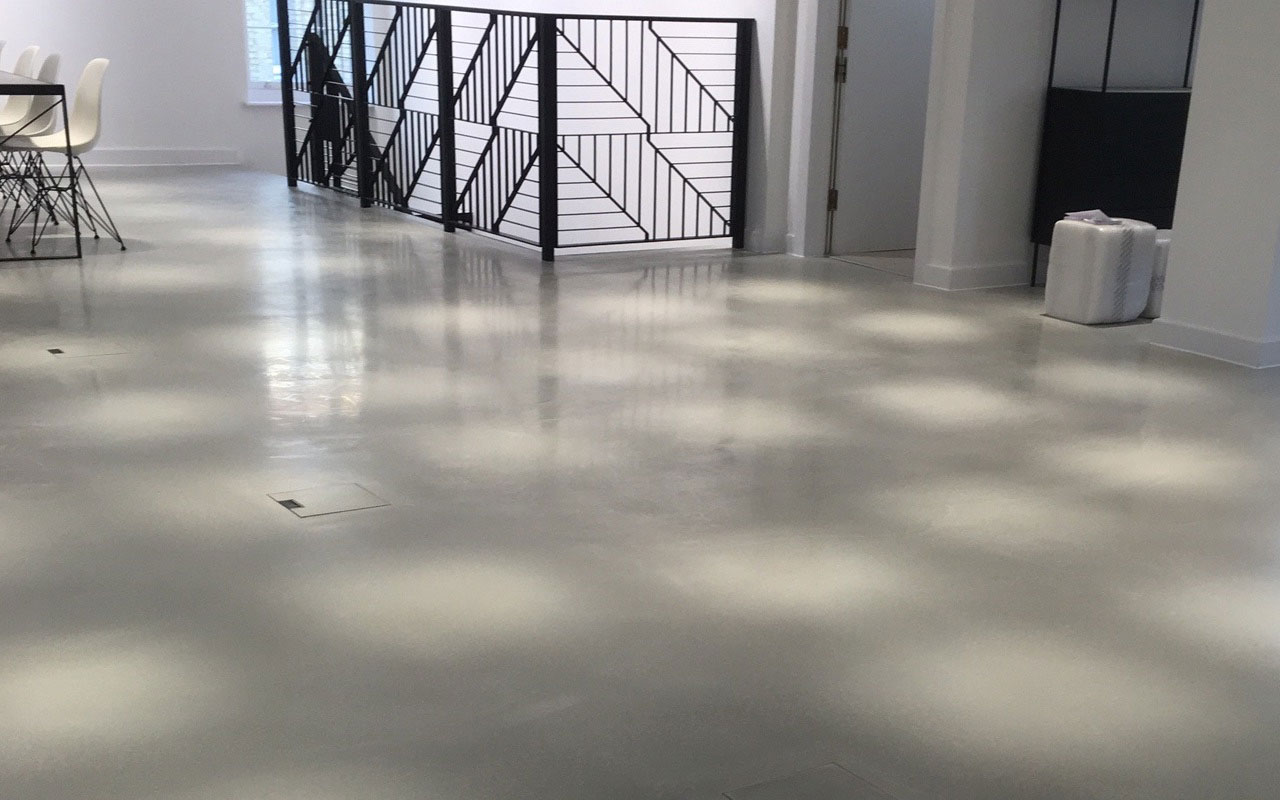
A polished slab is the concrete itself, ground and polished. Puur PSR is a separate cementitious finish, typically 6mm, laid over a properly prepared floor. Choose what works for the building. The photograph is only the starting point.
What is the difference between polished concrete and an overlay?
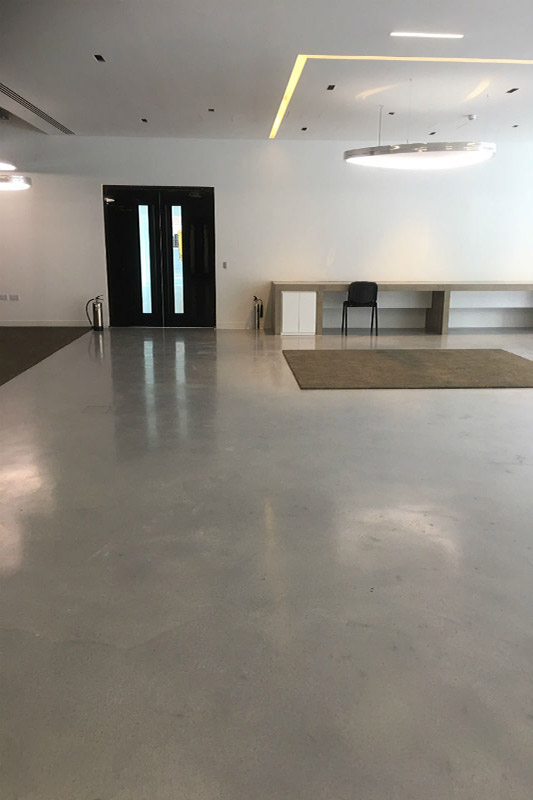
With a ground-and-polished floor, the slab becomes the finished surface. The mix, aggregate and condition of the concrete decide much of its appearance. An overlay works differently: it adds a separate decorative finish over the supporting floor.
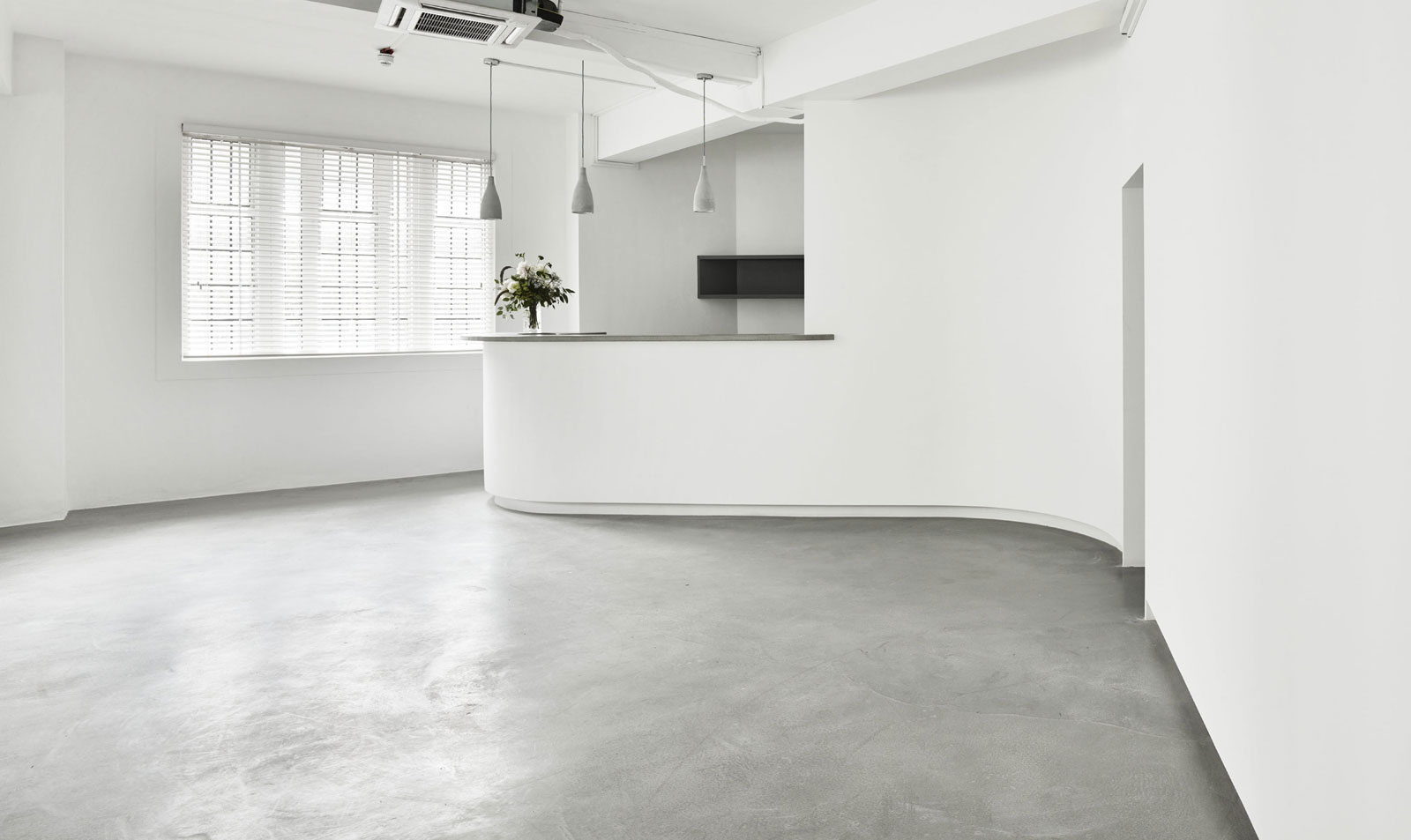
PSR is our polymer-modified, fibre-reinforced cementitious overlay. It has a hand-finished concrete character, with natural shade and patina variation that can change with site conditions. It is not a structural slab, and it is not Puur Mono resin. Different products, different jobs.
How thick is a Puur PSR polished concrete overlay?
At approximately 6mm, PSR keeps the build-up thin. Handy for refurbishment, but not a reason to skip the checks. Doors, thresholds, adjoining finishes and structural loading still matter.
The approved range is 4–12mm, with an optimum of 6mm, as set out in our SD21 data sheet and specification. Agree the preparation and complete floor build-up with us before installation.
Can an overlay go over an existing floor?
Screed, tiles, ply and cement boards can be suitable, with the right preparation. The name of the material isn’t enough. We need to check its condition, stability and moisture first.
A survey picks up cracks, contamination, movement and transitions before we agree a system. Covering a floor does not make its problems disappear. Defects and movement joints still need addressing.
Which system suits retail and commercial office floors?
Want the concrete look, but the existing slab isn’t suitable as the finish? An overlay is worth considering. If you already have a suitable slab and like its appearance, ground-and-polish may be the right route.
PSR can be poured in areas up to 1,000m². We still need to agree the layout, joints and pour sizes for your project. Our SD21 data lists R12 dry and R11 wet slip ratings; the right finish and testing must be checked for the actual use. Those numbers are not a safety guarantee for every setting.
What about colour, timing and cost?
PSR can be pigmented to RAL Classic or NCS colours. Use a physical sample to agree colour, sheen and natural variation. A screen can help you shortlist. It cannot sign off the floor.
An overlay is not automatically cheaper or faster. Preparation, repairs, access, area, sealing and protection all affect the price and programme. Ask us for a schedule for your job. Touch-dry is not the same as ready to use.
What should you send for a specification?
Send us the drawings, areas and what’s underneath. Add the intended use, colour, finish, joint layout and any dates we need to work around. We’ll help you put the brief together; ask for the current technical documents with your samples.
- Agree substrate preparation and moisture requirements.
- Confirm the complete floor build-up, finish and sealer.
- Confirm joints, transitions, slip requirements and cleaning regime.
- Agree protection and handover before follow-on trades arrive.
Sources & technical documents
Specifications can change. Check the current documents and your project’s requirements with us before tender or installation.